

Most patients find a TOE much more comfortable than they expected. The throat spray numbs the area effectively, and the sedation means most people have little or no memory of the procedure.
A TOE is an ultrasound scan of the heart performed from inside the oesophagus, the food pipe that runs from your mouth to your stomach. A thin, flexible probe is gently passed into the oesophagus via the back of the throat. Because the oesophagus sits directly behind the heart, this gives a remarkably detailed image of the heart's chambers, valves, and surrounding structures.
You will be given a throat spray to numb the area and, in most cases, a light sedative to keep you comfortable. Most patients find the procedure much easier than they expected.
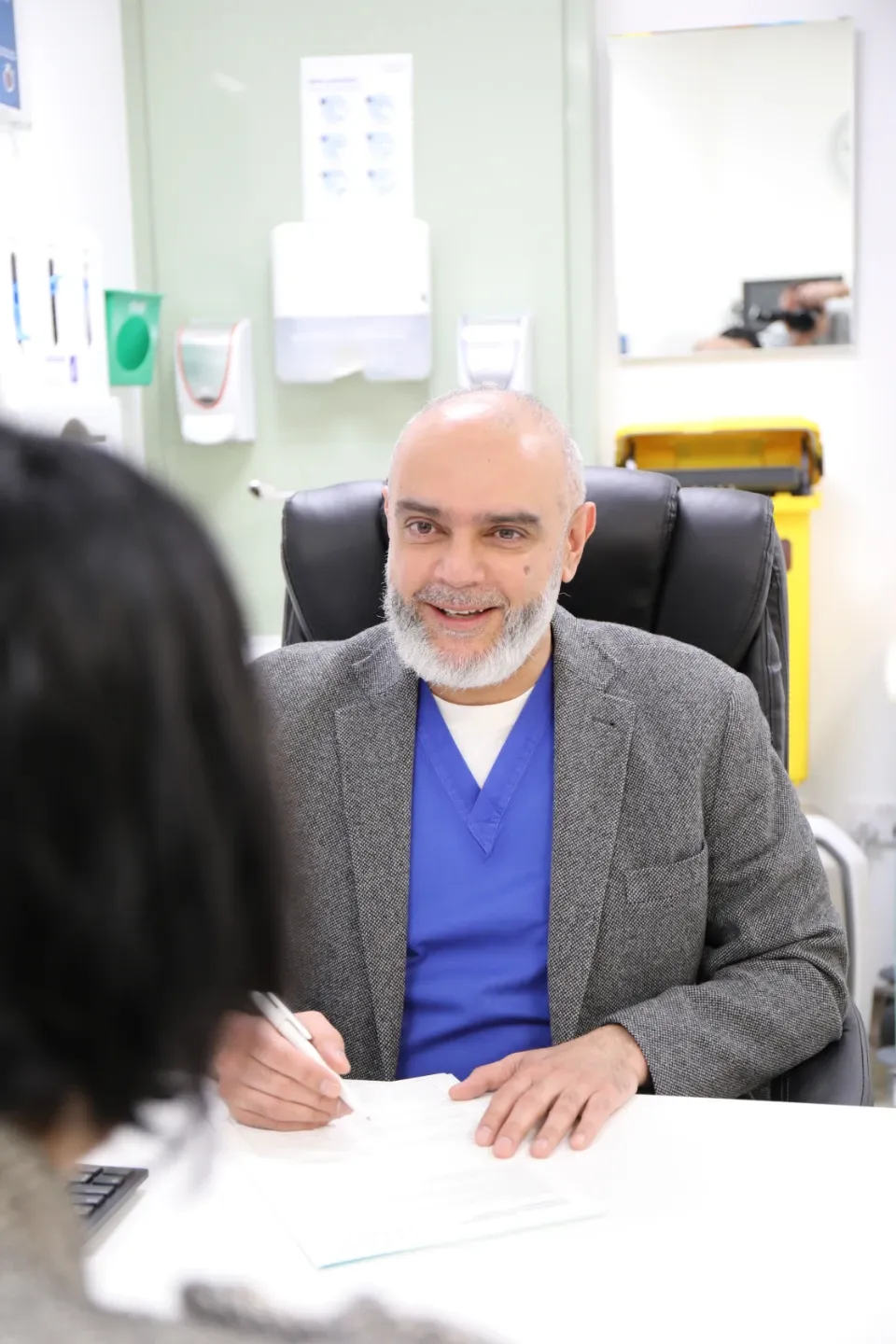
A standard echocardiogram (echo) is performed by placing an ultrasound probe on the outside of your chest. It is a very useful test, but the images can sometimes be limited by the ribs, lungs, or body tissue between the probe and your heart.
A TOE bypasses all of that. Because the probe is inside the oesophagus — just centimetres from the back of the heart — the images are far sharper and more detailed. This makes it the gold standard for visualising certain structures, particularly the left atrial appendage: a small pouch in the upper left chamber of the heart where blood clots can form in AF.
There are several reasons Dr. Kaba might recommend a TOE. The most common include:
Preparing for a TOE is straightforward. Please follow these instructions carefully:
When you arrive, a nurse will check your observations, attach heart monitoring leads, and place a small cannula in your arm for the sedative. Dr. Kaba will speak with you before the scan begins.
A local anaesthetic spray is applied to the back of your throat to numb the area. Once the sedative has taken effect, the probe - about the width of a finger - is gently passed through your mouth and into your oesophagus. You will be asked to swallow as it passes, which helps it move smoothly.
Once in position, a series of detailed images is taken from different angles. This usually takes around 15 to 30 minutes. Throughout the procedure, a nurse monitors your heart rate, blood pressure, and oxygen levels. Most patients are not aware of the procedure once the sedative has taken effect.
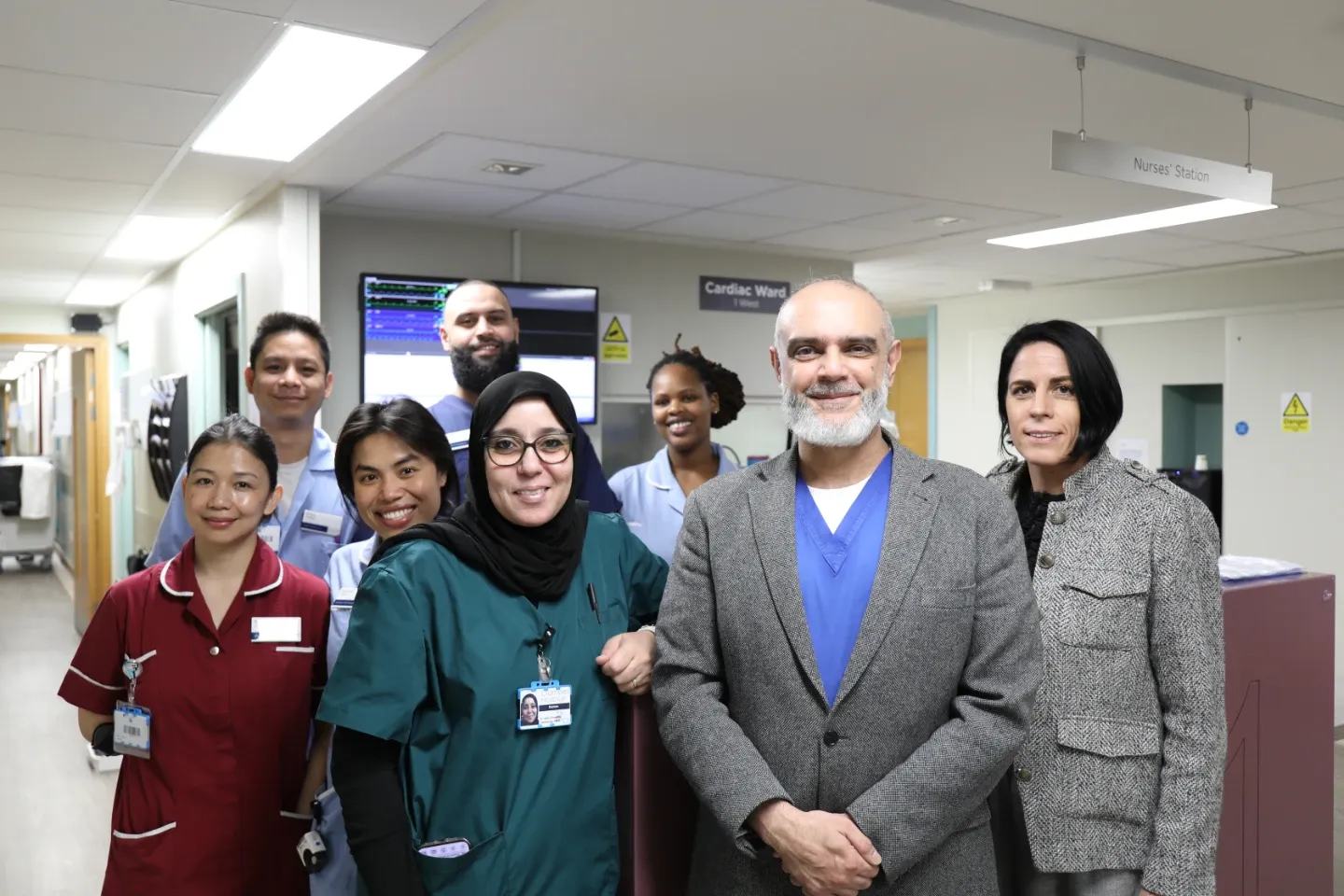
The most common reason for a TOE before cardioversion is to check for a blood clot in the left atrial appendage. If no clot is found, cardioversion can go ahead safely. If a clot is found, the procedure will be delayed and your blood thinners adjusted before rescanning.
For other reasons - such as valve assessment or structural questions - Dr. Kaba will explain clearly what he has found, using plain language without unnecessary jargon. You will always leave knowing what the results mean for your care.
A TOE is a day-case procedure. You will rest for approximately 30 to 60 minutes while the sedative wears off. Once you are fully alert and able to swallow comfortably, you will be able to go home.
A TOE is a very safe procedure. Serious complications are rare. The main risks are:
Dr. Kaba will discuss all of these risks with you fully before the procedure begins.
Most patients find a TOE much more comfortable than they expected. The throat spray numbs the area effectively, and the sedation means most people have little or no memory of the procedure.
You will receive a sedative that makes you drowsy and relaxed. You may drift in and out of awareness, but you will not be under a general anaesthetic. Most patients remember very little of the procedure.
No. Because of the sedation, you must not drive for 24 hours. Please arrange for someone to accompany you and take you home.
In most cases, Dr. Kaba will be able to discuss the key findings with you on the same day before you leave. A formal written report will follow shortly after.
If a clot is found in the heart, your cardioversion will not go ahead that day. Dr. Kaba will adjust your blood thinners and arrange to rescan after a further period — usually four to six weeks — once the clot has resolved and it is safe to proceed.
The scan typically takes between 15 and 30 minutes. Including preparation and recovery, you should plan to be with us for approximately two to three hours in total.
Not necessarily. If you have been taking blood thinners consistently for at least four weeks, it is often possible to proceed with cardioversion without a TOE. Dr. Kaba will advise you on which approach is most appropriate for your individual situation.
Why Dr Kaba
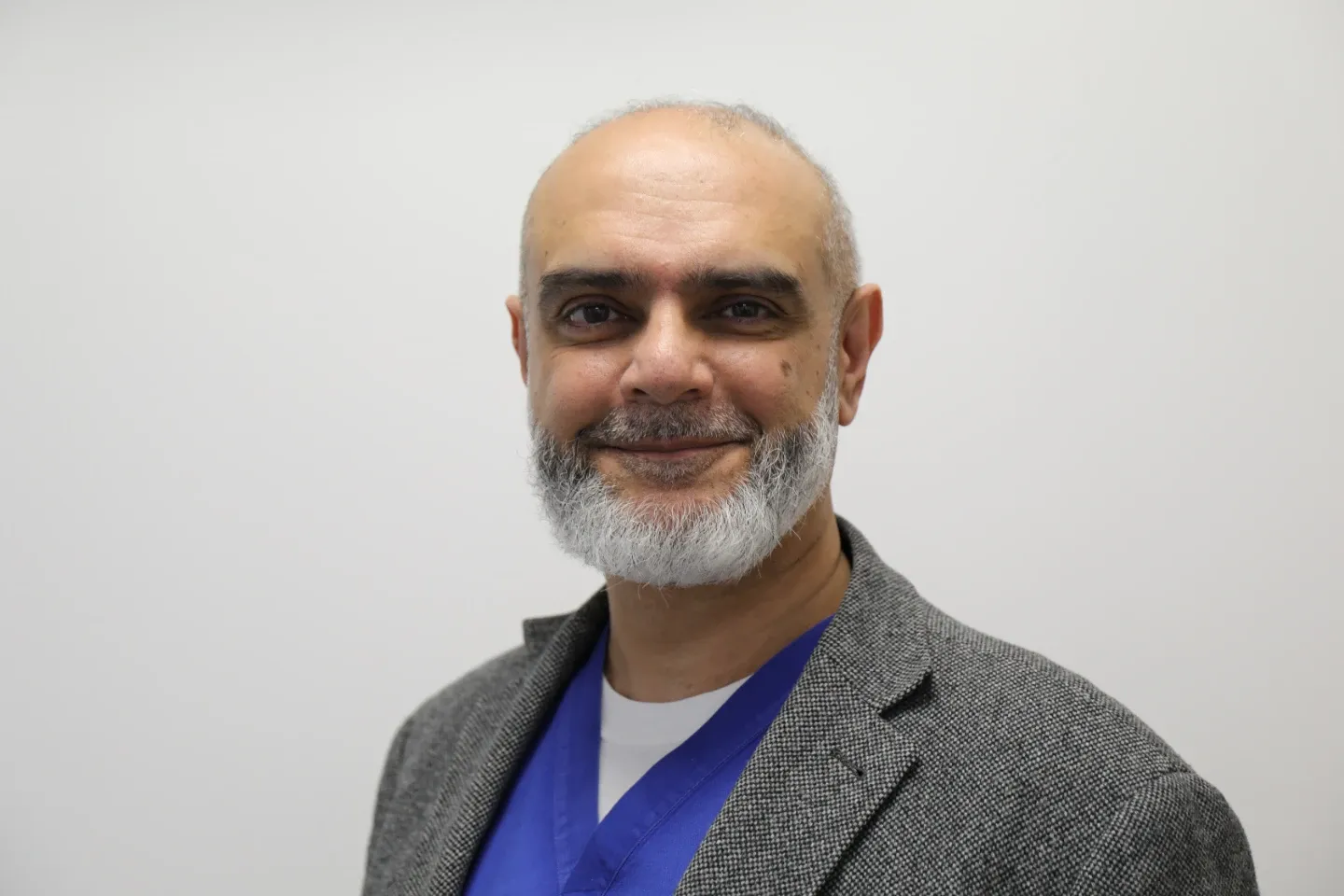
Dr. Kaba performs TOEs as part of a complete, joined-up care pathway. So the scan, the result, and the next steps are all handled by the same doctor who knows your full clinical history.
Session windows are published by area. Tap a session to book—exact venue details are shared after you confirm.
Full session times & locationsUrgent appointments can be made via WhatsApp or by calling our clinic on 07516004491.
Private care gives you timely access to specialist cardiac expertise, clear communication at each step, and a personalised treatment pathway built around your clinical needs. You receive continuity of consultant-led care from initial assessment through to follow-up.