


2019
Most hybrid AF ablation surgeries in Europe.
Dr Kaba has recently published a book on this topic and is seen as a worldwide leader in this field.
2019
Most hybrid AF ablation surgeries in Europe.
2022
Most hybrid AF ablation surgeries in Europe.
2023
Most hybrid AF ablation surgeries in Europe.
Many patients with persistent AF are successfully treated with Catheter Ablation. However, in a small number of cases the condition can be more resistant to treatment.
This may occur when:
It is common for the left atrium (one of the heart’s upper chambers) to become enlarged in patients with AF. When the enlargement is mild or moderate, AF can often still be treated successfully with Catheter Ablation. However, when the left atrium becomes severely enlarged, the condition may be more resistant to this treatment.
In these cases, combining standard catheter ablation with Convergent hybrid ablation may improve treatment success.
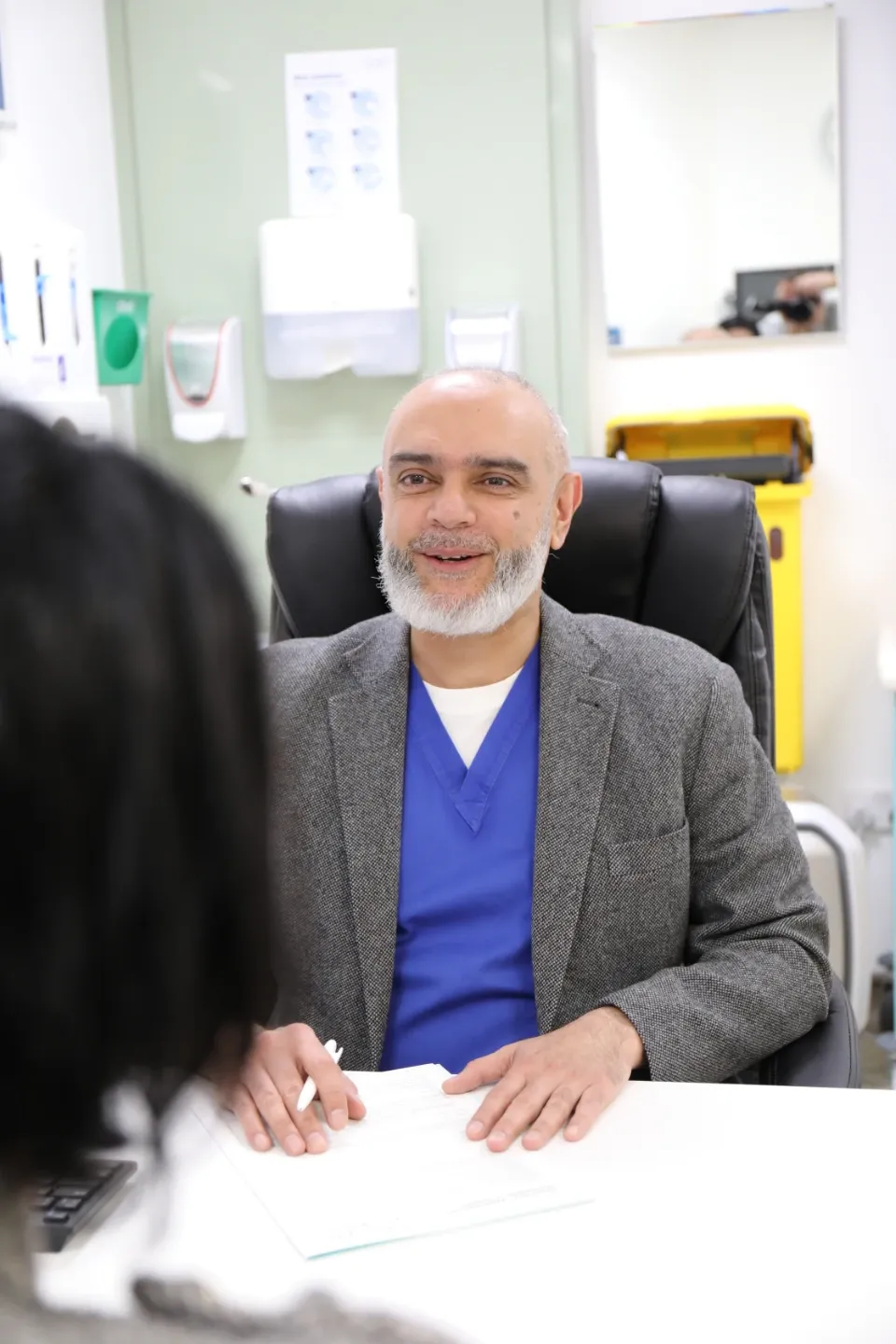
For some patients with difficult-to-treat AF, a specialised approach called hybrid ablation may be helpful. One minimally invasive method is the Convergent Procedure.
This approach combines two complementary techniques to treat AF more effectively.
Dr. Kaba is a well-recognised international authority in hybrid Convergent therapy for persistent AF
In resistant cases of AF, one challenge is ensuring that the ablation treatment reaches the full thickness of the heart muscle.
During ablation, we deliver electrical or thermal energy in a controlled manner to the heart tissue to block the abnormal electrical signals causing AF. In some cases, standard techniques performed from inside the heart may not fully treat the entire thickness of the heart wall, particularly in the thicker areas. When this occurs, small untreated areas of heart tissue can continue to cause abnormal signals, leading to AF returning.
Hybrid ablation aims to solve this by treating the heart tissue from both sides:
This improves the chance of creating effective and durable treatment across the heart muscle.
Hybrid ablation is carried out in two stages, usually separated by a few weeks or months.
The first stage is performed using standard catheter ablation techniques.
The second stage uses the Convergent technique.
This is a minimally invasive procedure and typically:
*In some cases, the order of the stages may be reversed, depending on the patient’s individual situation.
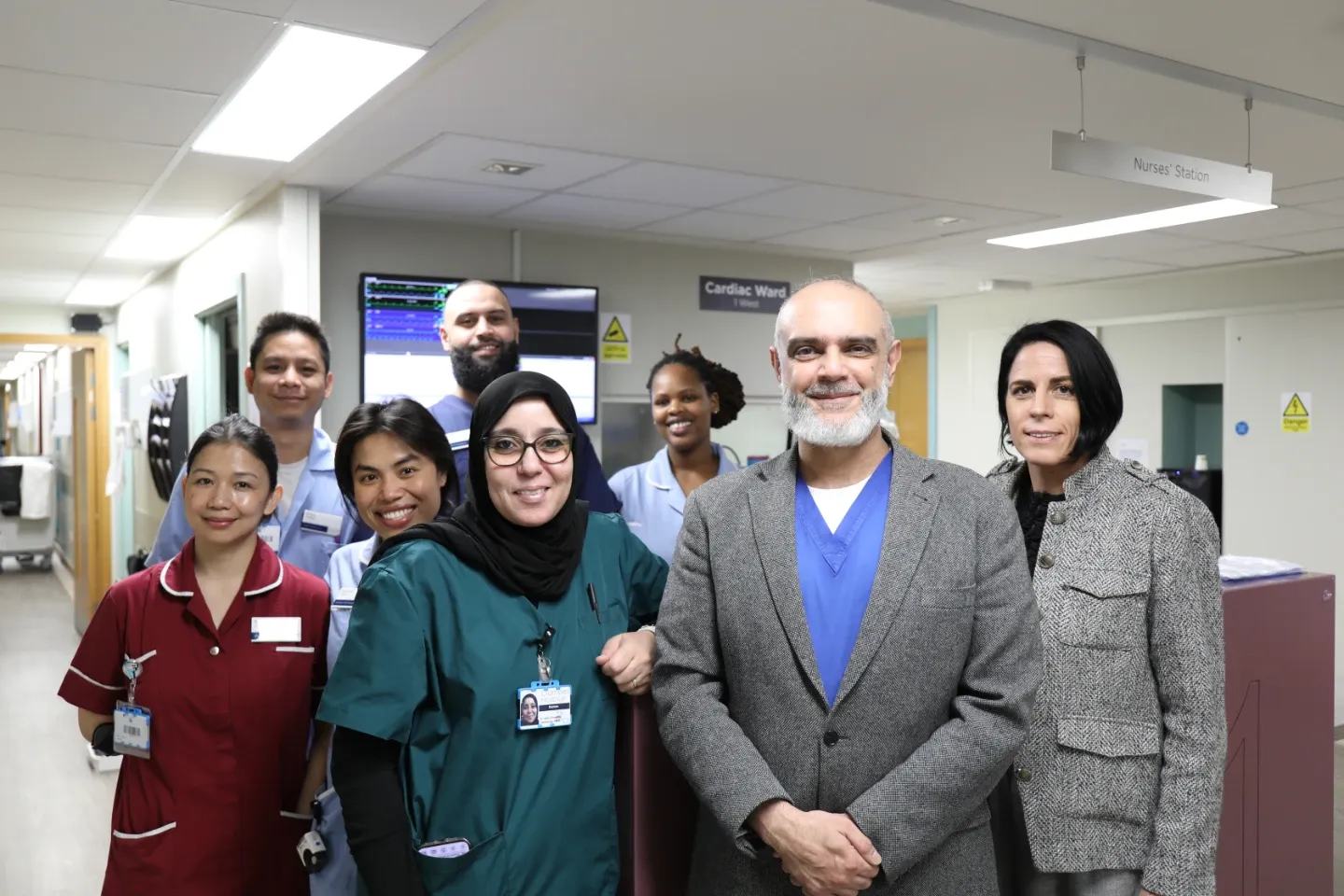
Our team has extensive experience in performing hybrid ablation and the Convergent technique. We have:
This experience helps ensure that patients receive care based on advanced techniques and many years of clinical expertise.
Hybrid ablation is not suitable for all patients with AF. It is usually considered for patients whose AF is particularly difficult to treat using standard methods.
Dr. Kaba will consider several factors, including:
If you meet the appropriate criteria, Dr. Kaba would be very happy to meet with you and discuss whether hybrid ablation may be a suitable option.
During the consultation, you will have the opportunity to:
Why Dr Kaba
Dr. Kaba leads the most experienced hybrid AF ablation team in Europe, having performed the highest volume of these procedures in 2019, 2022, and 2023, and is recognised as a worldwide leader in the field following the recent publication of his book on the subject.
Session windows are published by area. Tap a session to book—exact venue details are shared after you confirm.
Full session times & locationsUrgent appointments can be made via WhatsApp or by calling our clinic on 07516004491.
Private care gives you timely access to specialist cardiac expertise, clear communication at each step, and a personalised treatment pathway built around your clinical needs. You receive continuity of consultant-led care from initial assessment through to follow-up.